
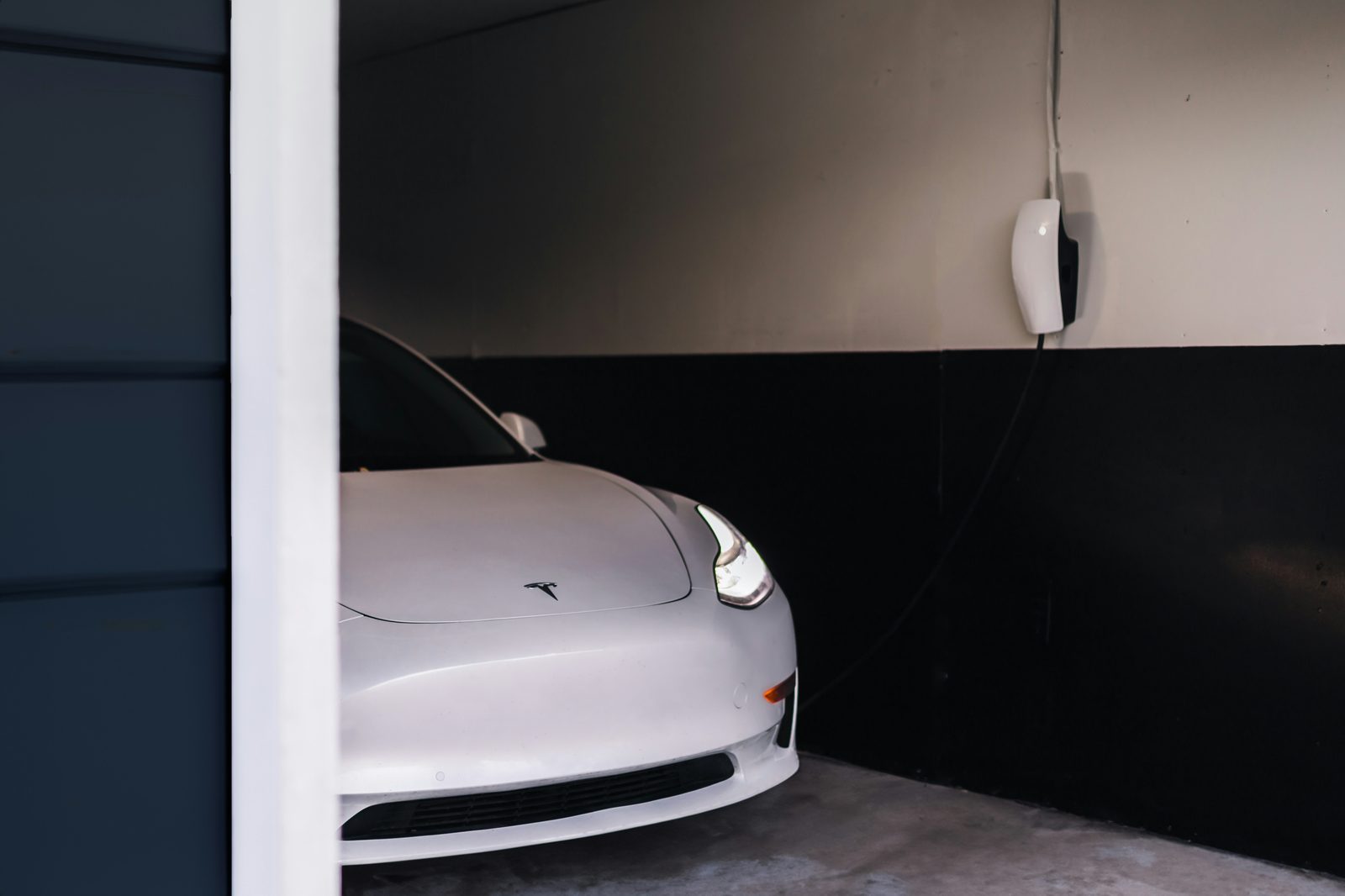
Cost Anatomy
The anatomy of a charging quotation
Five bands, four line items, and the handful of conditions that decide which band a house belongs to.
PreambleWhy the figure arrives as a range
A quotation for home charging is really two documents stapled together: a hardware line that barely moves, and an electrical line that can multiply by five depending on what sits behind the wall.
That second line is the reason a figure for home charging work is almost never given as a single number before someone has looked at the panel. Two identical houses, ordering the same unit in the same week, can be separated by three thousand dollars — not because one electrician charges more, but because one panel had two spare breaker positions and eighty amps of headroom, and the other had neither.
What follows takes the figure apart in the order an estimator does. First the band a property falls into. Then the four line items that fill that band. Then the specific conditions that push a job upward. None of it is a quotation; it is a way of reading one.

OneThe five bands, end to end
Nearly every residential job settles into one of five bands. The first three describe the electrical work alone. The last two describe what happens when the existing service cannot comfortably carry a 60 amp circuit and something has to give.
| Band | Conditions that define it | Range |
|---|---|---|
| Straightforward | Panel on the garage wall or the one behind it, spare breaker positions, surface-run conduit, framing still open. | $700 – $1,100 |
| Moderate | A longer run, one or two finished surfaces to cross, minor work inside the panel to free up space. | $1,100 – $1,500 |
| Complex | Long conduit routes, trenching to a detached garage, conductor fished through finished walls and insulation. | $2,500 – $3,500+ |
| Load device | Capacity shared with the rest of the house rather than expanded; device supplied, wired and commissioned. | $1,000 – $1,500 |
| Panel upgrade | A 100 amp service replaced with 200 amp: new main breaker, new busbar, every existing circuit re-terminated. | $3,000 – $5,000+ |
The two lower rows are not alternatives to the three above them. They are additions. A house that needs its service upgraded still needs the conduit, the conductor and the mounting work; the upgrade sits on top of a band-one or band-two job, which is how a straightforward $900 install becomes a $4,000 project without anyone changing their mind about the equipment.

TwoWhere the money actually goes
Take a mid-band job of roughly $1,300 and pull it apart. Four line items account for practically the entire figure, and while their proportions shift from house to house, their order of magnitude rarely does.
| Line item | What it buys | Share |
|---|---|---|
| Labour | A licensed electrician's time: survey, routing, drilling, terminations, commissioning and the return visit for sign-off. | 45 – 60% |
| Conductor | Heavy-gauge copper sized for a continuous 48 amp draw, plus conduit, fittings, straps and a sealed outdoor-rated enclosure where needed. | 15 – 25% |
| Panel work | The 60 amp double-pole breaker at minimum; a sub-panel, a tandem rearrangement or a load device where capacity is tight. | 0 – 35% |
| Permit | The electrical permit itself and the inspection that closes the file once the circuit is energised. | 5 – 10% |
Two things follow from that split. The first is that labour dominates, so anything that costs hours — ladders, crawl spaces, insulation, a fished wall — hits the total harder than any material. The second is that copper is the only item that scales cleanly with distance, which makes the position of the panel relative to the parking spot the single most predictable variable in the whole exercise. It is also why a published Tesla charger installation cost is always quoted as a range rather than a figure: the same four line items every time, weighted differently by every building they land in.
Distance is the quiet multiplier. Copper is priced by the metre, and labour is priced by how hard that metre is to reach.
ThreeWhat moves a job up a band
Estimators weigh five conditions, roughly in this order of impact. Any one of them can lift a job a full band on its own.
- Service capacity
- The largest single swing. A 200 amp service with room to spare absorbs a 60 amp circuit without comment. A 100 amp service usually will not, and the choice becomes an upgrade at $3,000 and up or a load-management device at $1,000 to $1,500. That fork is worth understanding before any quotation arrives, because sharing existing capacity rather than adding to it can be the difference of two to three thousand dollars on an otherwise identical job.
- Distance and routing
- A three-metre surface run in an open garage and a twenty-five-metre trenched run to a detached structure are the same job in name only. Fishing conductor through a finished wall can take longer than the entire rest of the install.
- Conductor gauge
- A continuous 48 amp load demands heavy copper, and long runs demand heavier copper still to hold voltage drop within limits. Gauge is set by the circuit and the distance, not by preference.
- Hardwired or plug-in
- Hardwiring is mandatory to reach the full 48 amp output. A plug-in setup on a 14-50 receptacle caps the unit at 32 amps and roughly 7.7 kW, but avoids some finishing work. The trade is speed against a modest saving.
- Permit and inspection
- A small, fixed, non-negotiable line. It is also the one item that proves the work was done to standard, and the paperwork behind a compliant install matters later, at resale and at claim time.
A fuller treatment of how these interact — and which of them can be influenced by choosing a different mounting position — belongs to the survey itself, where all five are weighed against one another in front of the building rather than on paper.

FourThe hardware line, read separately
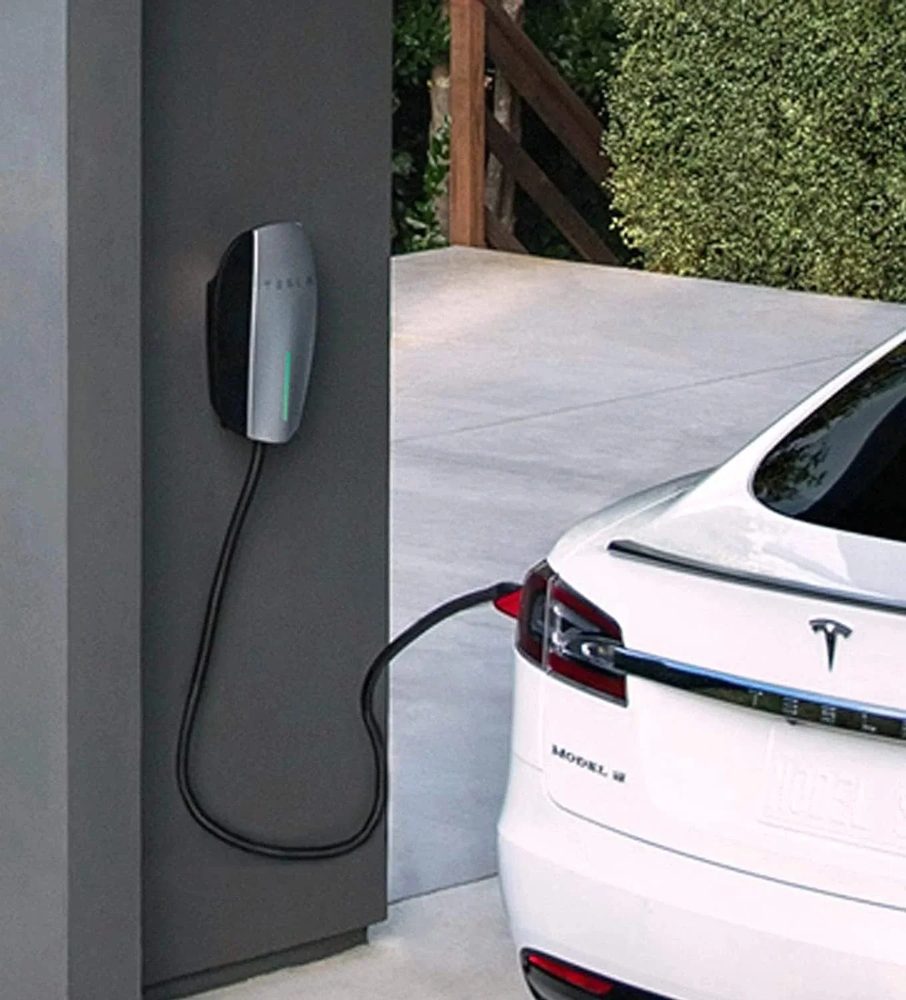
The equipment itself is the stable half of the quotation. A Universal Wall Connector runs around $785, carries a built-in NACS connector and ships with a J1772 adapter, so it serves non-Tesla vehicles without a second purchase. On a 60 amp breaker it delivers up to 48 amps continuously — about 11.5 kW — and returns roughly 70 to 75 km of range for every hour it runs.
That output is the reason the electrical work is what it is. Ask for less speed and the circuit shrinks, the copper thins and the bill falls; ask for the full 48 amps and the 60 amp circuit is not optional. It is worth knowing what the extra amperage actually buys.
| Equipment | Time |
|---|---|
| Universal Wall Connector | 52 min |
| ChargePoint Home Flex | 50 min |
| Grizzl-E Classic | 62 min |
| Standard 120 volt outlet | 7 hr + |
The competent Level 2 units cluster within twelve minutes of each other. The gap that matters is the last row: a 120 volt outlet returns only six to eight kilometres per hour, which is why the electrical work is bought at all.
FiveReading a quotation before accepting it
A figure is only as good as its assumptions. Four of them are worth confirming in writing before any work is scheduled, because each one is a band boundary in disguise.
- The run length the price assumes, and whether it is surfaced, trenched or fished.
- Whether panel work is included at a fixed price or listed as a provisional sum to be confirmed on the day.
- Whether the permit and the inspection are inside the figure or added afterwards.
- Whether the unit will be hardwired at 48 amps or plugged in at 32, since the two are not the same product in use.
Answer those four and the range collapses to something close to a number. A house with a nearby 200 amp panel and open framing will land in the $700 to $1,100 band and stay there. A house with a full 100 amp panel and a detached garage is a $4,000 conversation, and no amount of shopping around changes the physics behind it — only who is asked to price it.
Everything above concerns a single vehicle on a single circuit. Two vehicles can share one circuit through power-sharing between compatible units, and scheduling sessions off-peak lowers running cost without touching the install at all. Neither changes the bands; both change what the installed equipment is worth over the years that follow.